Fixing the Gaping Holes
in Estate Planning
A trust should work when your family needs it.
Estate planning should answer practical questions.
Who receives your assets?
Who can act if you cannot?
How will your family avoid unnecessary court delays?
How will your plan stay current when life changes?

The traditional estate planning model often answers only part of that.
A family meets with an attorney, signs a will or trust, leaves with a binder, and assumes the plan is finished. But estate planning usually fails in the follow-through. The trust was not actually funded. Beneficiary designations and transfer on death (TOD) designations on assets are not really adjusted. Other important ‘living benefit’ documents like powers of attorney (POA) and medical directives may not be completed. And there is no clear plan to make sure the trust remains funded and updated over a lifetime.
A will alone can still leave a family dealing with probate. A trust can be signed but never fully funded. A beneficiary form can send money somewhere you no longer intend. A missing POA or out-of-date trust can leave loved ones unable to pay bills, speak with banks, or make care decisions when help is needed.
There are gaping holes in the common estate planning process undercutting what families are trying to accomplish. Grantors (that’s probably you) have to know what they are and how to avoid them. So, in this article, we’re going to rip off the Band-Aid.

Three Choices
Most people have three basic estate planning choices.
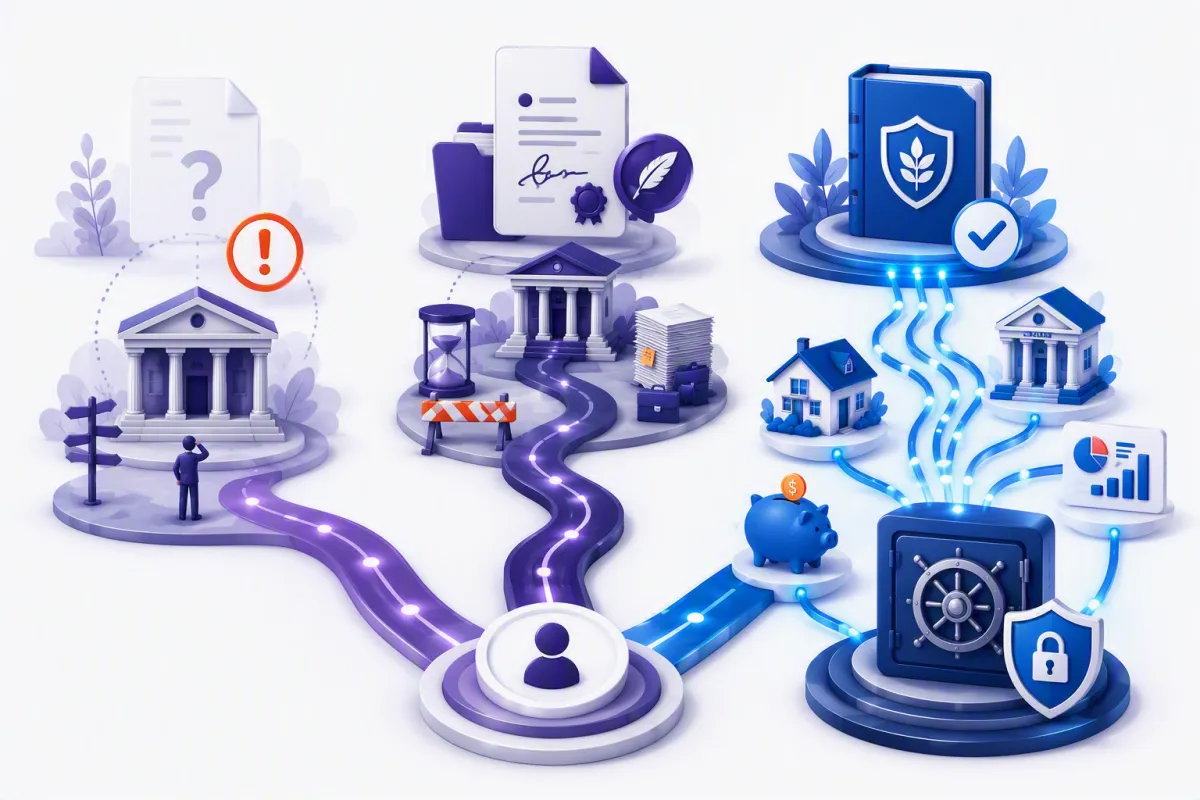
The first is to do nothing. If someone dies without a plan, state law decides where property goes. The family may have no control over who receives what, how much each person receives, or who must go through the court process.
The second is to rely on a simple will. A will can be useful, but it usually does not avoid probate by itself. Probate is the court process families often have to use to gain access to assets after someone passes away. It can involve attorney fees, delays, public filings, and family disputes.
The third choice is a trust-centered estate plan. For many families, especially those with real estate or meaningful assets, a properly funded revocable living trust can help avoid probate for assets connected to the trust. It can also be changed during life as family, property, laws, and wishes change.
The key phrase is properly funded.
Without funding, a trust may be little more than a set of instructions for assets it does not control – an “expensive paperweight.”
The Funding Gap
Funding a trust does not mean putting cash into an investment account. It means assigning or connecting assets to the trust so the trust can control them.
The majority of people who have purchased a trust still end up with assets going through public and protracted probate court. That is very often because their trust was either underfunded or not funded at all.
Funding can be detailed work. It may involve real estate, financial accounts, business interests, personal property, beneficiary forms, payable-on-death designations, and transfer-on-death arrangements. Almost no firms fully handle that work because it is time-consuming, cumbersome, and hard to maintain over a client’s lifetime. (To be clear, we know of 0 firms that handle funding outside our platform.)
The Probate Gap
For families, probate often means waiting while bills keep coming. A parent passes away, the house cannot be sold right away, and someone still has to pay the mortgage, insurance, utilities, taxes, and home maintenance.
Probate can also invite family and external conflict. A will may say what someone wanted, but a will is a document for the probate judge to interpret. It is not an absolute and binding document. In addition, probate is a most often a public process that requires public listing of assets through a court-filed inventory that details a person's property, values, and debts for anyone to see at the local courthouse or online portal. This process can create disputes, delay, and legal expense.
A properly funded trust can avoid all of this. But the trust does have to become – and remain – funded.
A new client, Julee, had a trust for four years and did not realize it had never been funded. The trust binder had an instruction page in the back explaining that funding was the client’s responsibility. The client thought the work was done because the documents had been signed. This is an extremely common experience.
Thomas related having a traditional book trust and finding out years later that the funding had not been handled properly. Fixing the problem cost more money after the initial trust purchase.
Melody’s mother passed away. The family went through probate and waited more than six months before the house or car could be sold. During that time, they kept paying the mortgage and insurance. The delay created financial strain that continued after probate because the house still had not sold.
The Update Gap
A revocable living trust is meant to change as life changes. That is one of its main advantages.
The problem is that traditional trusts are often inconvenient to update. A small change may require calling the attorney, scheduling an appointment, waiting for revised documents, and paying another fee. When every update feels like a project, people postpone updates.
Then the plan starts drifting away from real life.
Small but important changes in the trust become more cumbersome to change than they should be. A child getting married shouldn’t lead to a $700 charge to change her last name in your trust – but it often does.
The assets and accounts we have the day we create and fund a trust are unlikely going to remain the exact same assets and accounts we have when we pass away. We will buy or sell property, close and open accounts, and acquire investments or valuable property. If we want any of these things directed or protected by the trust, they have to be assigned to (fund) the trust. This is the regular updating that causes a majority of estate plans to deteriorate.
Other updates that very often don’t get done include changing a trustee or beneficiary due to changing relationships, a change in dependents, or medical instructions needs revision.
A good estate platform facilitates easier funding now and as life moves forward. It makes updates easy. Even better, a twenty-first century trust and estate platform pro-actively notifies the grantor (probably you) of legislative changes that affect the trust and updates the trust.

The Access Gap
Estate planning is rarely needed when life is calm.
It is needed when someone is in the hospital, a parent has passed away, family needs to pay bills on undistributed assets, or a trustee must act quickly.
Traditional paper plans can create access problems. The binder may be in a safe. The family may not know which version is current. The medical directive may not be available when a doctor needs it.
And a trust is a private affair. There is no central record where trusts are uploaded and held for retrieval. A traditional ‘book trust’ exists on the paper it is printed on and hopefully with the attorney or firm who completed the documents.
A good estate plan is a modern estate plan that is both secure and useable. The documents should be kept on a secure electronic platform in addition to the physical copy. This safeguards retrieval over time and should allow the right people to use it when it is needed from anywhere. Medical directives and related instructions can be easier to locate when the timing matters.

The Care Plan
Estate planning usually focuses on who receives property after death. A good plan also considers what may happen during life.
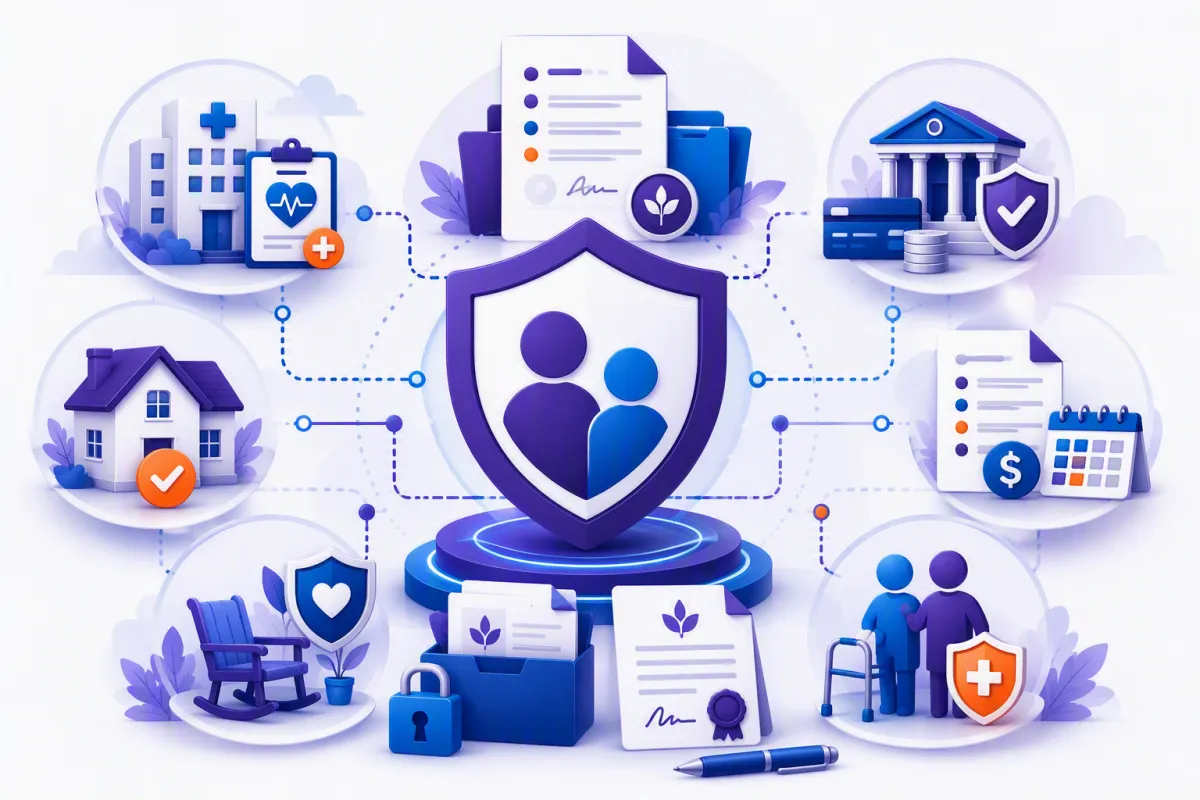
If you cannot act for yourself, someone may need authority to manage accounts, pay bills, speak with medical providers, arrange care, or make decisions you would have wanted made.
Lisa’s father died suddenly at 61. There was no advance planning, no life insurance, no health insurance, and very little direction. Her mother was left financially vulnerable, and the adult children stepped in without the authority, income, or experience they needed. It was a very difficult time.
A few years later Lisa was asked to help another family as trustee and power of attorney after a husband and father passed away. That situation involved rental properties, a home, farm property, bank accounts, healthcare decisions, dementia, and special needs. This time, a good estate plan was in place. Because the trust and authority documents were in place, the caregiving path was clearer and much more manageable.
Estate planning is not only about inheritance. Good estate planning includes advance planning that helps the right people act during illness, incapacity, care needs, and family transitions.
The Legacy approach
Legacy helps clients think through estate planning as a working system, not a one-time document purchase.
That includes the trust, pour-over will, powers of attorney, medical directives, beneficiary reviews, trust funding, real estate, trustee choices, care concerns, special needs planning, and future updates. The legal work is handled through qualified legal professionals alongside tax, insurance, and financial professionals. Funding is prioritized and made easier. Ongoing communication and updates are made even easier.
The old model often leaves families with good intentions and unfinished work. The better model helps create the plan, funds it properly, makes maintaining it easy, and makes it both secure and accessible.
A trust should not become an expensive paperweight.
It should be the estate plan you hoped it would be when your family needs it.
Specific to Medicare Plans, We do not offer every plan available in your area. Any information we provide is limited to those plans we do offer in your area. Please contact Medicare.gov or 1-800-MEDICARE to get information on all of your options. We do offer coverage in most states, representing over 130 organizations which offer over 300 different plans throughout the United States. Contact one of our agents to learn more about what companies and plans we represent in your area.
Navigation
Information